
PG Activity: Handprint Bird – A Creative Start to Early Learning
- Jennifer Mendoza
- Apr 17
- 5 min read

Early childhood is a stage filled with curiosity, discovery, and rapid development. Every activity introduced during these formative years plays a role in shaping a child’s cognitive, emotional, and physical growth. Among the many engaging experiences designed for young learners, the Handprint Bird activity stands out as a simple yet highly meaningful creative project. It combines sensory exploration, artistic expression, and developmental learning into one enjoyable experience.
At Nurture Infant House, activities like the Handprint Bird are thoughtfully integrated into daily routines to support holistic growth. As a trusted Tampines infant care, Tampines child care, Tampines preschool, and Tampines nursery, the focus goes beyond basic care—emphasizing purposeful play that nurtures young minds in a structured yet warm environment.

What is the Handprint Bird Activity?
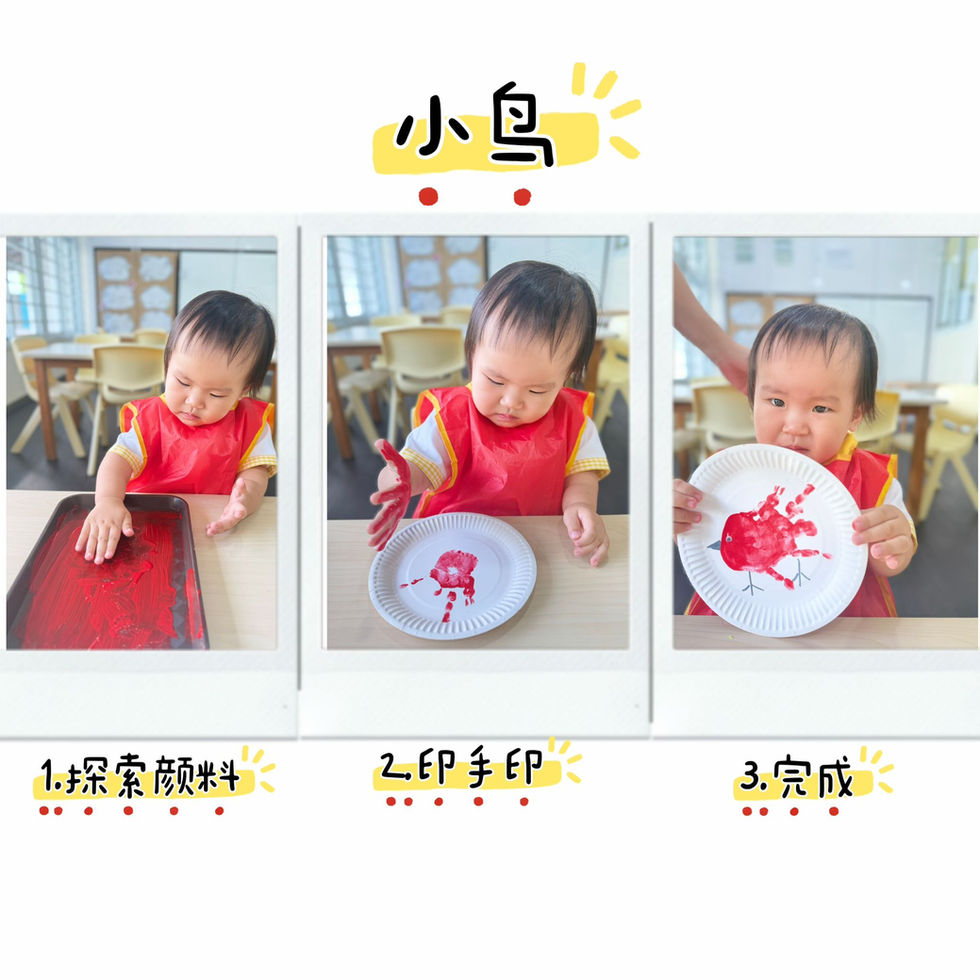
The Handprint Bird activity is a creative art project where children use their painted hands to create bird shapes on paper. The palm forms the bird’s body, while the fingers become wings or feathers. Once the handprint is complete, children can decorate their birds with eyes, beaks, colors, and patterns.
While it may appear simple, this activity is rich in developmental value. It introduces children to textures, colors, shapes, and imaginative storytelling—all at once.
Why Creative Activities Matter in Early Childhood
Children learn best through hands-on experiences. Activities like the Handprint Bird go beyond entertainment; they help build essential skills that form the foundation for future learning.
1. Sensory Development
When children dip their hands into paint, they engage their sense of touch. The feeling of wet paint, the motion of pressing their hand onto paper, and the visual transformation all stimulate sensory awareness.
In a quality Tampines infant care setting, sensory play is an important part of daily routines. It helps infants and toddlers become more aware of their environment while encouraging exploration.
2. Fine Motor Skills
Creating a handprint bird requires coordination and control. Children learn to position their hands, press gently, and later use tools like crayons or brushes to decorate their artwork.
These actions strengthen fine motor skills, which are essential for writing, drawing, and everyday tasks. At a well-structured Tampines child care, activities are designed to gradually build these abilities through engaging play.
3. Creativity and Self-Expression
Each handprint bird is unique. Some children may choose bright colors, while others experiment with patterns or additional details. This freedom allows them to express their individuality and imagination.
Creative expression is a key focus in a nurturing Tampines preschool environment, where children are encouraged to explore ideas without fear of making mistakes.
4. Cognitive Development
Through this activity, children begin to understand cause and effect—how their actions create visible results. They also learn to follow simple instructions, recognize shapes, and identify colors.
In a supportive Tampines nursery, such structured yet playful learning experiences help build early cognitive skills in a natural and engaging way.
The Learning Process Behind the Fun
The Handprint Bird activity may look like simple art, but it actually involves multiple stages of learning:
Preparation: Children observe materials such as paint, paper, and brushes.
Execution: They apply paint to their hands and create the print.
Observation: They watch how their hand transforms into a bird shape.
Enhancement: They add details like eyes, wings, and backgrounds.
Reflection: They talk about their artwork and share it with others.
This process encourages patience, focus, and communication—skills that are essential in early education settings like a Tampines preschool.
Social and Emotional Benefits
Beyond physical and cognitive development, the Handprint Bird activity also supports emotional and social growth.
Building Confidence
Completing an artwork gives children a sense of achievement. Displaying their handprint birds helps boost confidence and self-esteem.
Encouraging Interaction
Children often participate in this activity together, sharing materials and ideas. This promotes cooperation and social bonding, which are key elements in a Tampines child care environment.
Emotional Expression
Art provides a safe outlet for emotions. Even at a young age, children can express happiness, curiosity, or excitement through colors and designs.
A Safe and Supportive Learning Environment
At Nurture Infant House, activities like the Handprint Bird are conducted in a safe, clean, and well-supervised setting.
Special attention is given to:
Using child-safe, non-toxic materials
Maintaining proper hygiene during activities
Providing guidance while allowing independence
Creating a calm and encouraging atmosphere
These elements are essential in any reliable Tampines infant care or Tampines nursery, where the well-being of children is always a top priority.
Integrating Art into Early Education
Art activities are not isolated events—they are part of a broader educational approach.
The Handprint Bird activity can be linked to various learning themes, such as:
Nature and Animals: Introducing birds and their habitats
Colors and Shapes: Identifying and mixing colors
Storytelling: Creating simple stories about the birds
Music and Movement: Singing songs related to birds
In a comprehensive Tampines preschool, these connections help children see how different areas of learning are interrelated.
The Role of Educators in Guiding Activities
Educators play a crucial role in maximizing the benefits of activities like the Handprint Bird.
Their responsibilities include:
Demonstrating the steps clearly
Encouraging participation without pressure
Observing each child’s progress
Providing positive reinforcement
At Nurture Infant House, educators are trained to understand the developmental needs of each child. This ensures that every activity, including creative projects, contributes meaningfully to growth and learning.
Supporting Development at Every Stage
Children develop at different paces, and activities are often adapted to suit their age and abilities.
For Infants
In a Tampines infant care setting, the focus may be on sensory exploration—allowing infants to feel paint textures and observe colors.
For Toddlers
In a Tampines nursery, toddlers begin to participate more actively, pressing their hands and recognizing shapes.
For Preschoolers
In a Tampines preschool, children take on more complex tasks, such as decorating their birds and creating stories around them.
This progression ensures that each child is appropriately challenged while still enjoying the activity.
Encouraging Creativity Beyond the Classroom
Parents can also extend the Handprint Bird activity at home.
Simple variations include:
Using different colors to create a “rainbow bird”
Adding feathers or craft materials for texture
Creating a background scene like a sky or forest
Turning the artwork into greeting cards or keepsakes
Such activities strengthen the bond between parents and children while reinforcing what they learn in a Tampines child care or Tampines preschool environment.
A Holistic Approach to Early Childhood Learning
The Handprint Bird activity reflects a broader philosophy of learning through play. It combines creativity, education, and emotional development in a way that feels natural and enjoyable for children.
At Nurture Infant House, this approach is embedded in daily routines. As a trusted Tampines infant care, Tampines child care, Tampines preschool, and Tampines nursery, the focus remains on nurturing each child’s potential through meaningful experiences.
Conclusion
The Handprint Bird activity is more than just an art project—it is a gateway to learning, creativity, and self-discovery. Through simple materials and guided play, children develop essential skills that support their overall growth.
In a well-structured environment like Nurture Infant House, such activities are carefully designed to align with developmental goals while keeping children engaged and happy. Whether it’s building fine motor skills, encouraging imagination, or fostering social interaction, every element of the activity contributes to a child’s early learning journey.
As children press their tiny hands onto paper and watch them transform into colorful birds, they are not just creating art—they are building confidence, exploring their abilities, and taking their first steps toward lifelong learning.
Nurture Infant House (2 to 18 months Infants)
Blk 433 Tampines Street 43 #01-61 S(520433) - Since 2011
Opening hours: Monday to Friday (7am to 7pm)


