Play Ideas for Your Two-Year-Old at Home: A Tampines Parent's Guide

By Nurture Infant House, Tampines
If you have a two-year-old at home, you have probably noticed that the hours between breakfast and bedtime can feel very long. The good news is that the most valuable learning for a toddler does not need a timetable, a screen or a shelf full of toys. It needs your attention, a few ordinary objects and the freedom to explore. This guide shares practical, low-cost play ideas that suit Tampines families living in HDB flats, organized by the part of the home where they work best.
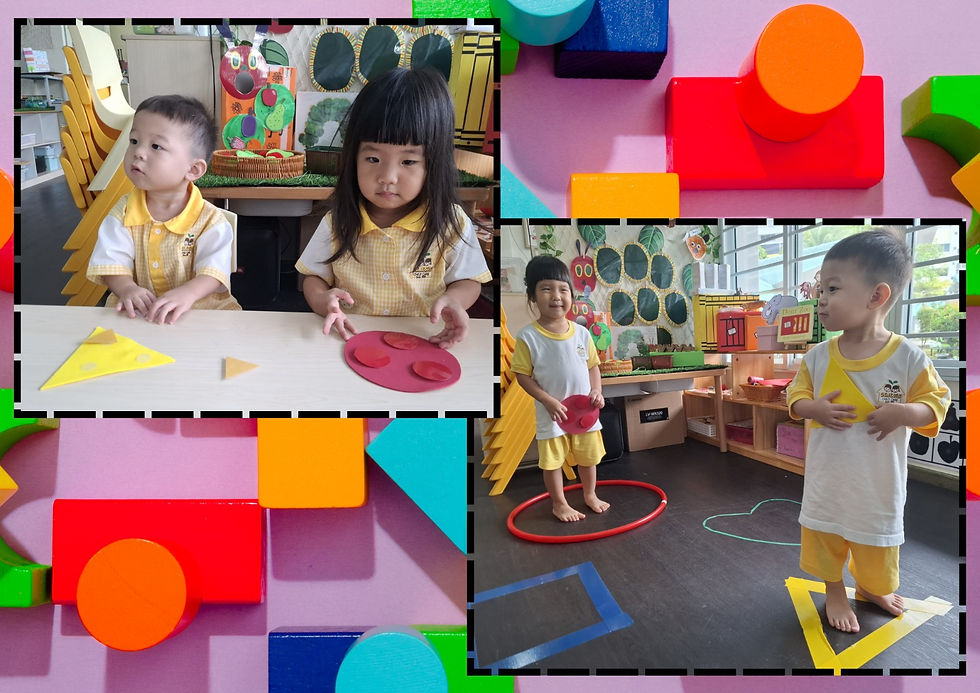
Fun learning activities at Tampines preschool nursery
What does a 2-year-old actually need to learn?
A 2-year-old is not preparing for primary school yet. They are learning four big things: how to use their bodies, how to communicate, how to get along with others and how to do small things for themselves. Almost every activity in this guide supports at least one of these.
That is also why the best learning moments are often unplanned. A toddler who spends ten minutes fitting lids onto containers is working on coordination, shape recognition and persistence all at once. Our role as adults is mostly to set the scene, stay close and describe what is happening in simple words.
In the kitchen: let your toddler be your little assistant
The kitchen is full of free learning material, as long as sharp, hot and breakable things are well out of reach.
Pots, lids and wooden spoons. Give your child a low cupboard to raid, filled with safe items such as steel bowls, plastic containers and wooden spoons. They will bang, stack, nest and match lids to pots. Name each thing as they handle it, and talk about sounds: loud, soft, fast, slow.
Washing fruit and vegetables. Put a bowl of water on a mat and let your toddler rinse tomatoes or soft fruit. They practice pouring, squeezing and gentle handling, and you get a natural chance to teach words for colors, textures and tastes.
Simple snack preparation. Spreading soft butter on bread with a blunt knife or peeling a banana with your help builds the same hand skills they will later use for writing and self-feeding. Do not worry about the mess.
In the living room: stories, songs and make-believe
The living room is where most Tampines families spend their daytime hours, so it is worth making it a space for connection.
A blanket tunnel or pillow fort. Drape a sheet over two chairs or stack cushions, and let your child crawl through. This builds strength and spatial awareness, and the cozy hideout often becomes the setting for imaginative games.
Hide and find. Show your toddler a small toy, cover it with a cloth and ask, "Where did it go?" This simple game teaches that things still exist when they cannot be seen, which is an important step in thinking and memory.
Shared book time. Sit close and let your child turn the pages, even if they skip half the book. Use funny voices, make animal sounds and pause so your child can fill in familiar words. If your family speaks Mandarin, Malay, Tamil, a dialect or a mix of languages, read and tell stories in whichever language feels most natural to you. A warm, rich home language gives children a strong base for everything that follows.
Rhymes with movement. Songs such as "Row, Row, Row Your Boat" or "If You're Happy and You Know It" combine rhythm, language and action. Add scarves or ribbons for waving, or have your toddler march like a soldier and tiptoe like a cat.
On the floor: hands-on games for little fingers
Some of the most useful play happens at ground level, with a mat and a handful of simple materials.
Posting games. Cut a hole in a tissue box or a covered container and let your child post large pom-poms, cloth squares or wooden blocks through it. The motion of grasping and releasing strengthens the small muscles in the hand.
Sticker play. Large stickers on paper or on a window help refine the pincer grip. Ask your child to put a sticker "next to the sun" or "on the big circle" to practice position words.
Sorting everyday objects. A muffin tray or a few bowls are enough for sorting by color, size or type. Try big and small spoons, red and blue blocks or soft toys versus cars.
Playing with blocks. Chunky blocks are timeless. Build a tower, knock it down and build it again. Children learn about balance, cause and effect and patience.
In the bathroom and at bath time: water play
Bath time is a ready-made learning session. Give your toddler plastic cups, a small watering can or a sponge, and let them fill, pour and squeeze. Talk about floating and sinking as you drop in different toys. Bubbles are another favorite: blowing and popping them builds breath control, which later supports speech.
Always stay within arm's reach during water play, even if the water is shallow.
By the window or along the corridor: observing the world
Many HDB flats have wonderful views for a curious toddler. Spend a few minutes at the window pointing out buses, birds, clouds and people walking by. Count the cars, name the colors and ask, "What do you see?" This kind of conversation teaches observation and builds vocabulary without a single toy.
If you have a safe, supervised space along the corridor or at a balcony, a paintbrush and a small cup of water can become an art project. Let your child "paint" the floor or wall with water and watch it disappear in the sun.
Beyond the flat: Tampines places that suit toddlers
Fresh surroundings spark new interest. Tampines has plenty of options within easy reach of most homes.
The playground downstairs. Sandpits, low slides and climbing frames help with balance and strength and give your toddler a chance to watch and copy other children.
The void deck. A soft ball and some open floor space are all you need for rolling, kicking and chasing games on a hot or wet day.
Tampines Eco Green. A leafy setting where you can look for butterflies, listen for birdsong and collect fallen leaves.
Our Tampines Hub. A convenient indoor spot with community spaces, useful when the weather is unpredictable.
Tampines Regional Library. Board books, picture books and a calm environment to introduce your child to the joy of reading.
It is a good idea to check opening hours and any program schedules before heading out.
How long should each activity last?
For a 2-year-old, expect somewhere between five and fifteen minutes of focused play. If your child wanders off after three minutes, that is perfectly normal. It does not mean the activity failed. Keep a few options ready and rotate them, and bring back favorites a few days later. Toddlers often take a different approach the second or third time around.
A useful rule of thumb is to follow your child's lead. If they are fascinated by the lids, spend the whole morning on lids.
How can I support my toddler's speech at home?
Talk to your child as much as you can, even when it feels one-sided. Describe what you are doing ("Mummy is washing the cup"), repeat their words and add a little more ("Yes, a big truck!"), and give them time to answer. Avoid correcting every mistake. Simply say the sentence back the right way. Singing, reading and naming objects around the home all feed your child's growing vocabulary.
What about screens and apps?
Screens are part of modern life, but they cannot replace the real-world interaction toddlers need. If you do choose to use them, keep sessions short, pick calm and age-appropriate content and sit with your child to talk about what you see. Most of the learning, however, still happens through touch, movement and conversation.
What if my child seems to be behind?
Children grow at different speeds, and a few weeks' difference at this age is rarely a concern. However, if your toddler is not using any words, does not respond when called, avoids eye contact or has lost skills they once had, it is wise to talk to your family doctor or a pediatrician. Early guidance can make a real difference, and asking questions is never an overreaction.
Thinking about childcare for your 2-year-old?
Some parents find that their toddler thrives on the company of other children and a structured, yet playful, day. Others prefer to wait a little longer. Neither choice is wrong. If you are exploring options, look for a center where educators speak warmly with children, classrooms feel calm and safe and parents are kept informed about their child's day.
At Nurture Infant House, we believe the early years should feel secure, joyful and unhurried. We care for young children through gentle routines, caring relationships and plenty of opportunities to explore, and we welcome parents who would like to visit and ask questions. You know your child best, and we would be glad to help you decide what suits your family.
Common questions from Tampines parents
What are easy things to do with a 2-year-old at home? Try kitchen helping, water play, building with blocks, reading picture books, singing action songs, making a blanket tunnel and playing hide and find. Most need only items you already own.
How do I keep my toddler busy without a screen? Offer a small selection of safe objects, rotate them every few days and join in for the first few minutes. Once your child is settled, step back and stay nearby.
Is it fine if my toddler only plays with one thing? Yes. Repeating the same activity is how toddlers master a skill. You can gently add small variations, such as a new container or a different color.
Should my 2-year-old be learning letters and numbers? Not formally. Singing counting songs, pointing out numbers in the lift or counting stairs together is plenty at this stage.
What if my child is shy around other children? Shyness is common. Visit the playground at quieter times, let your toddler watch from your side and avoid pushing them to join in. Confidence grows gradually.
How much outdoor time does a 2-year-old need? Daily outdoor play is ideal, even for a short stretch in the cooler parts of the day. Fresh air and space to move help with sleep, mood and energy.
Can I teach my toddler more than one language? Yes. Children can learn two or more languages at once, and using your strongest language at home is very helpful.
Summing up
Playing with your two-year-old does not need to be complicated. Turn ordinary corners of your home into small learning spaces, talk and sing often, and keep activities short and flexible. Step outside to the playground or library when you need a change of scene. Above all, enjoy these years. The patience and attention you give now will stay with your child long after the toys are packed away.
About Nurture Infant House
Nurture Infant House is a Tampines childcare center that supports families . Our approach centers on warm relationships, safe surroundings and learning through play, and we work closely with parents so that each child feels known, valued and ready to grow.
Nurture Infant House (2 to 18 months Infants)
Blk 433 Tampines Street 43 #01-61 S(520433) - Since 2011